Z.ai releases GLM-5.4, its first Loop Transformer model, to Coding Plan users
GLM-5.4 runs 28 layers of the GLM-5 base twice to reason deeper without more parameters. It is on the GLM Coding Plan now; the API comes after a safety review.

TL;DR
- GLM-5.4 loops 28 layers of the GLM-5 base model for two iterations, adding depth without adding parameters [2].
- It is available to all GLM Coding Plan users, with 1.5 times the GLM-5.3 quota on weekly plans [2].
- The model API will open after a security assessment, and open weights are planned after safety hardening [1][2].
Z.ai, also known as Zhipu AI, has released GLM-5.4, which it calls its first flagship model built on a Loop Transformer architecture [1][2]. The model is available now to all GLM Coding Plan users, while the model API will open after a security assessment [2]. Z.ai says GLM-5.4 reaches intelligence levels comparable to models with 2 to 3 trillion parameters [2].
Why it matters
Developers do not need to wait for the API: GLM-5.4 can be used through the coding tools that Coding Plan subscribers already use [2]. TestingCatalog reports that it is set as glm-5.4[1m] in Claude Code and glm-5.4 in other tools [1]. The architecture is also worth watching: instead of adding parameters, Z.ai runs part of the network twice. If this holds up, labs could get more reasoning out of the same weights.
How the loop works
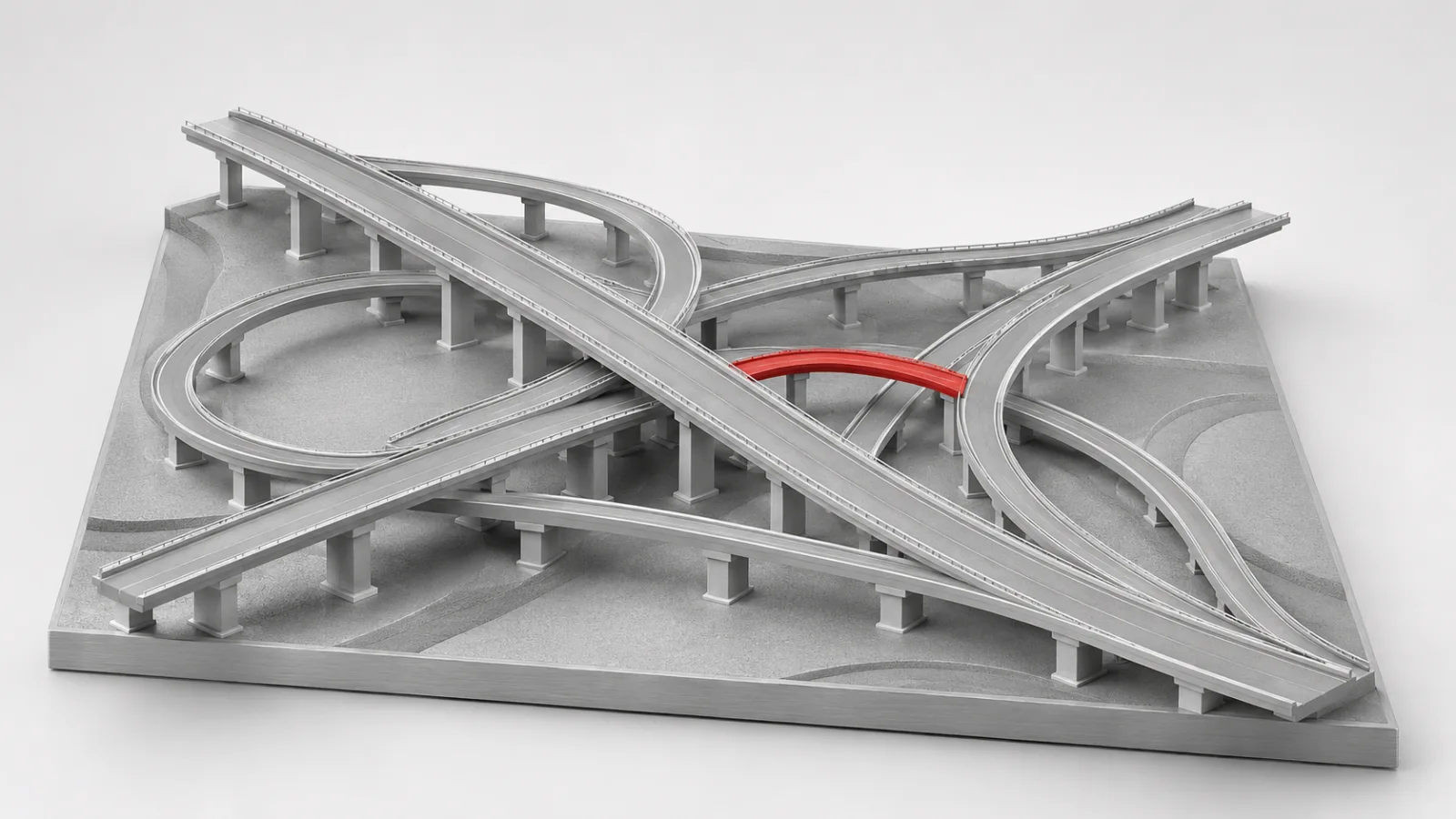
In a standard Transformer, each layer runs once per forward pass. In a Loop Transformer, a block of shared layers runs several times and refines the result of the previous pass [2]. GLM-5.4 loops 28 layers of the GLM-5 base model for two iterations [2]. Z.ai did not train the looped model from scratch; it converted an already pre-trained base through continued training, because looped models trained from scratch still trail unshared models on the same compute budget [2].
At its 750B scale, Z.ai made three changes to keep deployment costs in check [2]:
- per-token gates that control how much each pass writes back into the residual stream;
- a hybrid KV cache, so the extra loop costs one sliding window of cache instead of a full context cache;
- reuse of the first pass’s sparse attention indices in the second pass.
On a 30B test model with about 10% more training compute, looping gave the largest gains in math, scientific reasoning and long-context tasks, and cut average output length by 10 to 14% on benchmarks such as GPQA-Diamond and MMLU-Pro [2].
Specs and limits
The model takes video, image, text and file input, outputs text, and has a 1M-token context with up to 128K output tokens [2]. Z.ai says it reaches up to 200 tokens per second off-peak and 70 to 80 tokens per second at peak load [2]. On weekly quota plans, the GLM-5.4 quota is 1.5 times that of GLM-5.3 [2].
Z.ai notes one known weakness: the model tends to get stuck in overly long “marathon thinking” loops, although the company says this extra self-correction improves accuracy [2]. TestingCatalog notes that no benchmark scores for GLM-5.4 itself had been published at launch [1]. Open weights are planned once safety hardening is complete, with no date given [1].
Sources
Written and checked by AI from the sources below
Fact-checked by gpt-6.1-sol on · Editorial policy