Google Research explains DeepCrossAttention, a smarter residual connection
DeepCrossAttention lets each transformer layer pick which earlier layers to draw from, matching standard models with up to 5x fewer training steps.
TL;DR
- DeepCrossAttention (DCA) replaces plain residual addition with learned, per-token routing across earlier layers [1].
- On C4 and LM1B, DCA matched standard transformers in up to five times fewer training steps [1].
- It adds less than 0.2% to model size and can be retrofitted onto a pre-trained transformer [1].
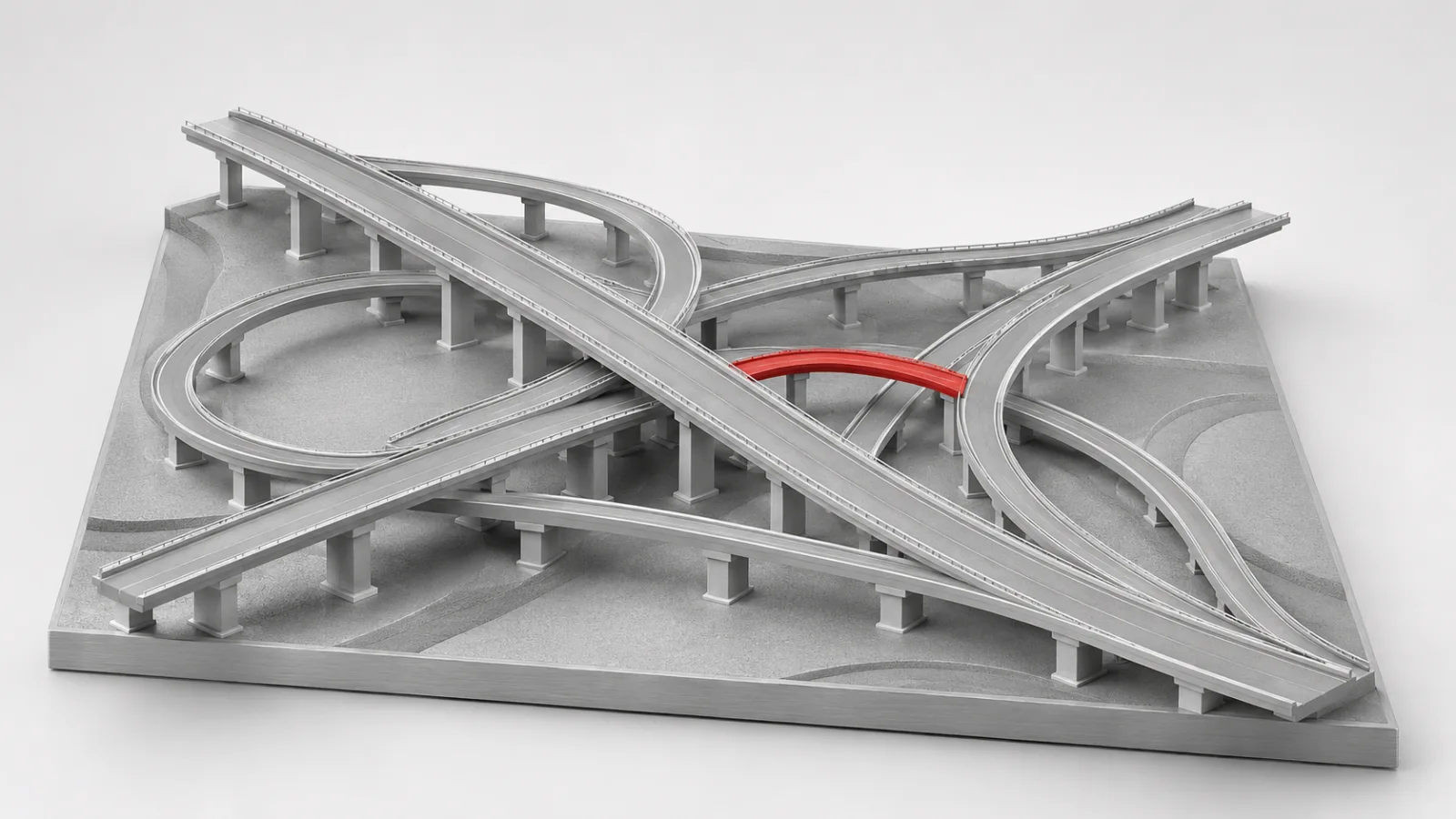
Google Research published a blog post on 23 November 2026 explaining DeepCrossAttention (DCA), a transformer architecture first presented in an ICML 2025 paper [1]. DCA changes how residual connections work: instead of adding each layer’s input to its output with equal weight, every layer learns which earlier layers to draw information from [1].
Why it matters
Transformers rely on residual, or skip, connections to train networks with dozens or hundreds of layers [1]. The standard version sums a layer’s output with its input and treats all earlier representations equally [1]. Google says this dilutes information in deep networks: details from early layers get averaged out, and the network has to recompute them, which wastes training [1]. For teams that pre-train or continue training their own models, reaching the same quality in fewer steps could mean less GPU time.
How DCA works
DCA adds a small module to each layer that decides how to combine previous embeddings for each token [1]. It has two parts [1]:
- Dynamic layer routing: for every token, DCA computes mixing weights from a learnable base plus an input-dependent projection, so the network can shift between sequential and parallel processing.
- Depth-wise cross-attention: standard attention works across tokens; DCA also attends across layers, with separate queries, keys and values drawn from a weighted mix of earlier layer embeddings.
Results
On the C4 and LM1B language modeling datasets, DCA reached the quality of standard transformers in up to five times fewer training steps [1]. With the same training budget, it consistently reached lower perplexity [1]. To get below a perplexity of 14 on LM1B, a standard transformer of fixed width needed 42 layers, while DCA did better with 30 layers, a 29% cut in depth and parameters [1].
DCA adds less than 0.2% to total model size [1]. Because it can start out behaving exactly like a standard residual network, it can be added to an already trained transformer [1]. In that test, briefly continuing training with DCA lowered LM1B perplexity by 0.19, against 0.02 for continued standard training [1].
Related approaches
The post places DCA in a wider move toward dynamic residual routing [1]. It describes Moonshot AI’s attention residuals, which also select from earlier layers, and says Thinking Machines’ Inkling 2 model adopted that design together with DCA’s split Q/K/V cross-attention [1]. It also covers hyper-connections and the manifold-constrained version that keeps training stable [1]. The experiments in the post cover controlled synthetic setups, LM1B and C4 language modeling, and image classification [1].
Sources
Written and checked by AI from the sources below
Fact-checked by gpt-6.1-sol on · Editorial policy